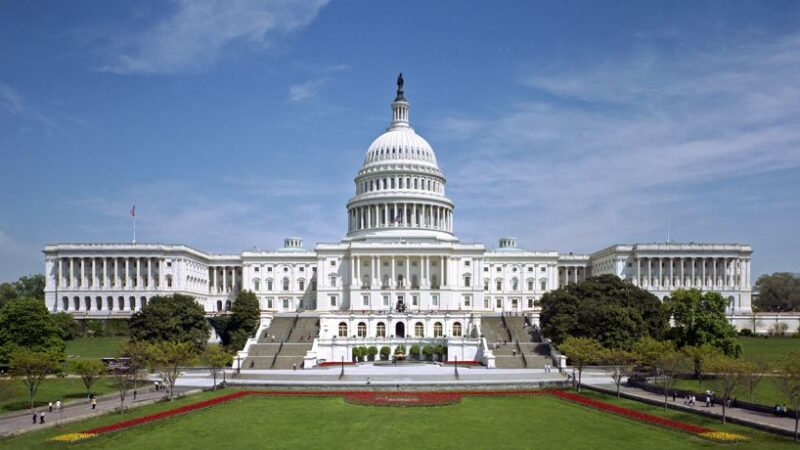
When Americans vote on Tuesday, they will not only choose 35 senators and 435 representatives, but also decide how the next two years will be governed: whether one party controls both chambers, whether control is split, and whether the president faces a Congress that can pass his agenda, block it, or investigate it. The midterm is often described as a referendum on a president, but its practical effect is a question of governing arithmetic, and that arithmetic will be settled district by district, state by state, on Tuesday night and in the days that follow.
Republicans hold a 53 to 47 Senate majority and a narrow House edge, according to reporting on the final weekend. If Republicans keep both chambers, the president will have a Congress that can pass legislation, confirm nominees and set the agenda without needing opposition votes, although a narrow House edge still requires party discipline on every close vote. If Democrats take the House, while Republicans keep the Senate, the result is a split Congress, where legislation must be negotiated, where investigations can be launched by the opposition, and where the president’s power shifts from legislating to vetoing, and to executive action.
If Democrats were to take both chambers, a scenario that would require a net gain of four Senate seats as well as a House majority, the president would face a Congress that can pass bills he must veto, override vetoes only with a two thirds majority, and set a legislative agenda that is the opposition’s, not his. That scenario is the most consequential, and the least likely on current arithmetic, but it is why both parties campaign as if control of both chambers matters, because it does, even when the odds favour a split result.
What split government actually does
Split government does not mean no government. It means negotiated government, where budgets, debt limits and must pass bills require compromise, and where partisan bills pass one chamber and die in the other, or pass both and face a veto. It also means oversight: a House controlled by the opposition can hold hearings, subpoena documents and investigate the administration, in ways that a House controlled by the president’s party rarely does. That oversight, whether it is seen as accountability or as obstruction, becomes a central feature of the next two years.
Confirmations are the Senate’s distinctive power, and they continue regardless of House control. A Senate majority, even a narrow one, can confirm judges, cabinet officials and ambassadors, while a Senate minority cannot block confirmations outright, but can slow them, demand concessions, and use the confirmation process to highlight disagreements. That is why the 35 Senate races, and the 53 to 47 majority, matter as much as the 435 House races, even though House races attract more local coverage.
The mandate question
After Tuesday, both parties will claim a mandate, regardless of the result, and both claims will be partly true. A party that takes the House will claim voters rejected the president’s agenda. A party that keeps the Senate will claim voters endorsed it. The reality will be more mixed: voters in different states and districts voted for different reasons, on different issues, and the national result will be the sum of those local decisions, not a single message.
More than 51 million Americans have already voted, a midterm record, and millions more will vote on Tuesday. The Congress they elect, unified, split, or somewhere in between, will govern the next two years, not by slogan, but by vote count, and the vote count on Tuesday night, in the Senate and in the House, will be the first, and most important, fact of that governing story.